- Number of projects to be funded: Two projects.
- Funding amount: CHF 3,000 for each winning project.
- Project implementation period: Up to 9 months.
- Location: Global. Projects may be implemented anywhere, provided they focus on strengthening resilience to floods and droughts.
- Project areas: Disaster risk reduction, flood and drought preparedness and response, adaptation, and community resilience.
- Project nature: The project must be practical and results-oriented.
- Objectives: The project objectives, timeline, and scope must be clearly defined.
- Innovation: The project must include an innovative element that is realistic and feasible.
- Sustainability: The project should be sustainable and scalable.
- Application language: English or Spanish.
- Application method: Applicants must submit their project proposal through the official online application form.
- Number of applications: Each applicant may submit the proposal only once and in one of the two accepted languages. Duplicate submissions will not be considered.
- Submission requirement: Only proposals submitted through the official application forms will be considered.
- Guidelines: Applicants should carefully read the application guidelines before submitting their proposal.
- Support during implementation: Leaders of the winning projects will receive guidance and support from experts in flood and drought management.
- Deadline: 31 August 2026.
Publish Date
8/8/2026
Application Deadline
8/31/2026
Opportunity Type
Competitions
Publisher
Foras Khadra
Available Countries
All World, The Arab World, Palestine, Jordan, Syria, Lebanon, Iraq, Saudi Arabia, Kuwait, Qatar, Bahrain, United Arab Emirates, Oman, Yemen, Egypt, Sudan, Libya, Tunisia, Algeria, Morocco, Mauritania, Djibouti, Somalia, Comoros
Description
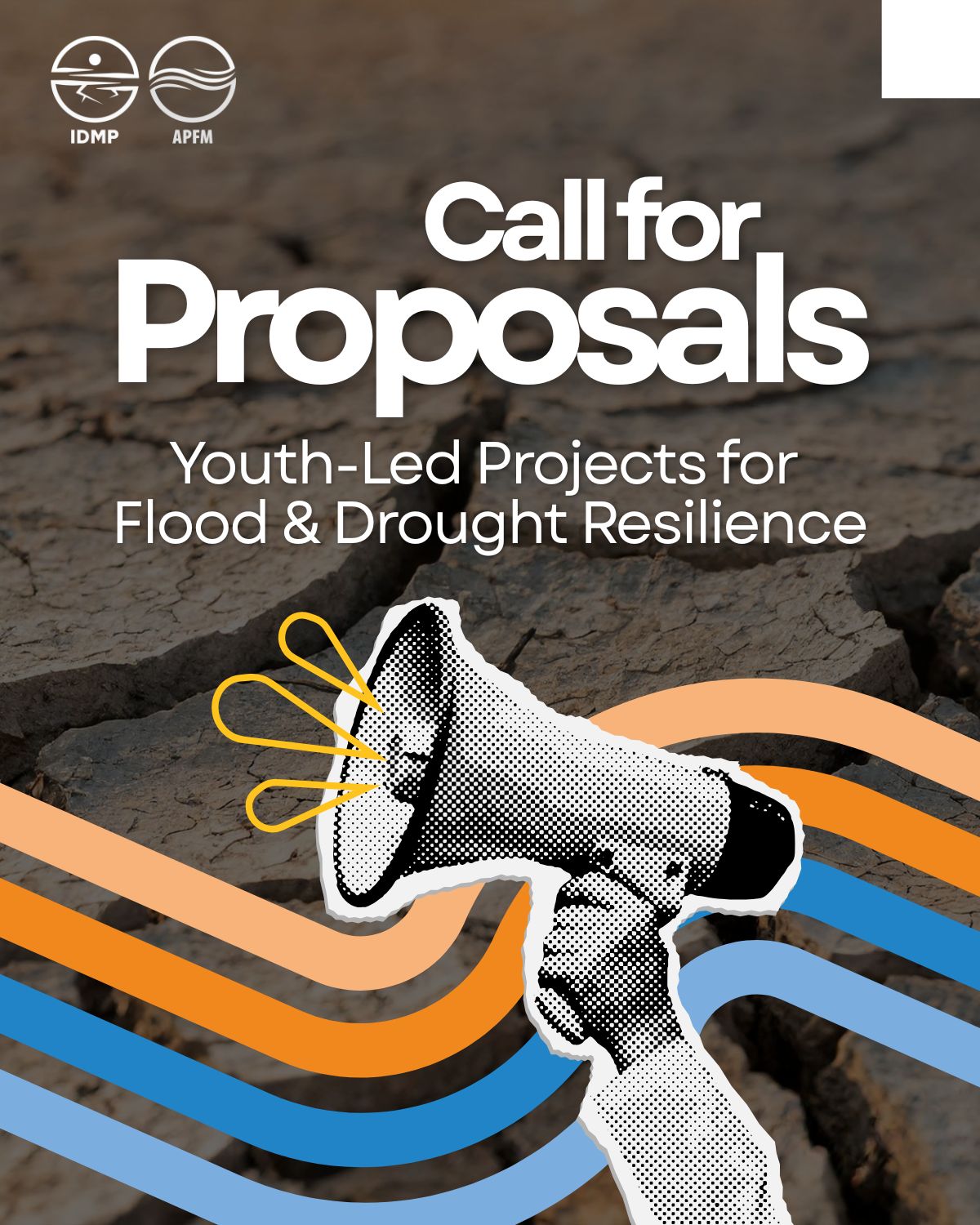
This is a global competition aimed at supporting and funding innovative ideas and projects led by young people to address challenges related to floods and droughts and strengthen the resilience of communities exposed to these hazards.
The competition focuses on empowering young people to design and lead practical solutions in disaster risk reduction, preparedness, and response. Projects should be based on local needs and produce tangible results.
The competition is also connected to the Early Warnings for All (EW4All) initiative and aims to highlight the role young people can play in climate action and in strengthening resilience to flood and drought risks.
The competition is organized by the Associated Programme on Flood Management (APFM) and the Integrated Drought Management Programme (IDMP), joint programmes of the World Meteorological Organization and the Global Water Partnership, in partnership with the Water Youth Network.
Details
Eligibility Criteria
- The project must be youth-led.
- Project leaders must be students or young professionals between 18 and 35 years old.
- The project must demonstrate the active participation and engagement of young people under the age of 35 in its activities.
- The project must be practical and results-oriented.
- The project objectives must be clearly defined.
- The project must have a clear timeline and scope.
- The project must make a tangible contribution to strengthening resilience to floods and droughts.
- The project must produce tangible outputs.
- The project implementation period must not exceed 9 months.
- The project must have potential for scalability.
- The project must be sustainable in the long term.
- The project must include a realistic and feasible innovative element.
- Examples of innovative elements include combining indigenous and scientific knowledge, developing new models for community engagement, using low-cost adaptation approaches, and strengthening women's participation.
- The official page does not specify a particular nationality requirement.
- The official page does not specify a particular academic qualification.
- The official page does not specify a minimum number of years of professional experience.
- The proposal must be submitted in English or Spanish.
Opportunity Benefits
- CHF 3,000 in funding for each of the two winning projects.
- Financial support to implement a youth-led project focused on strengthening resilience to floods and droughts.
- A project implementation period of up to 9 months.
- Guidance and support from experts in flood and drought management.
- The opportunity to lead and implement a practical project with community impact.
- The opportunity to develop an innovative solution to address flood and drought risks.
- The possibility of developing a project that can be scaled and sustained.
- The opportunity to contribute to strengthening local communities’ capacity to cope with disasters.
- An opportunity to contribute to climate action and strengthen the role of young people in disaster risk reduction, preparedness, and response.
- Contribution to the objectives of the Early Warnings for All (EW4All) initiative.